
Lafayette County’s Multi-Day Arrest Record
Lafayette County has no weekly police blotter and no official 72-hour report. The closest tool is the official LCSO direct inmate feed. It reaches back well past one day. Arresting agencies from around the county feed their bookings into it. That makes its older portion the best official window on recent arrests. It is not a full archive, though. No fixed display window is published. The Lafayette County recent arrests hub shows how the roster fits with booking records. Photographs and other custody stages appear there too. The inmate search and the direct feed both sit inside the same OCV Sheriff App. Treat them as one system. The honest label is what the screen shows: current and recent as displayed.
Read the Lafayette Police Blotter
Start from an approximate date and work backward. The first screen is not the whole list. Keep the alleged offense, the custody status, and the case outcome as three separate facts. A public card can flag a likely record, but the jail log and the court docket each answer different questions.
- Open the official LCSO inmate search or direct feed and sort by displayed date.
- Find the name and compare age, descriptors, image, agency, and release field.
- Record the displayed date and source without calling it the exact arrest time.
- For missing dates, ask LCSO for a defined detention-log range.
- Use Search ARCourts for later public case events, not as a jail roster.
The official multi-day feed source shows why the system can be useful beyond its first entries.
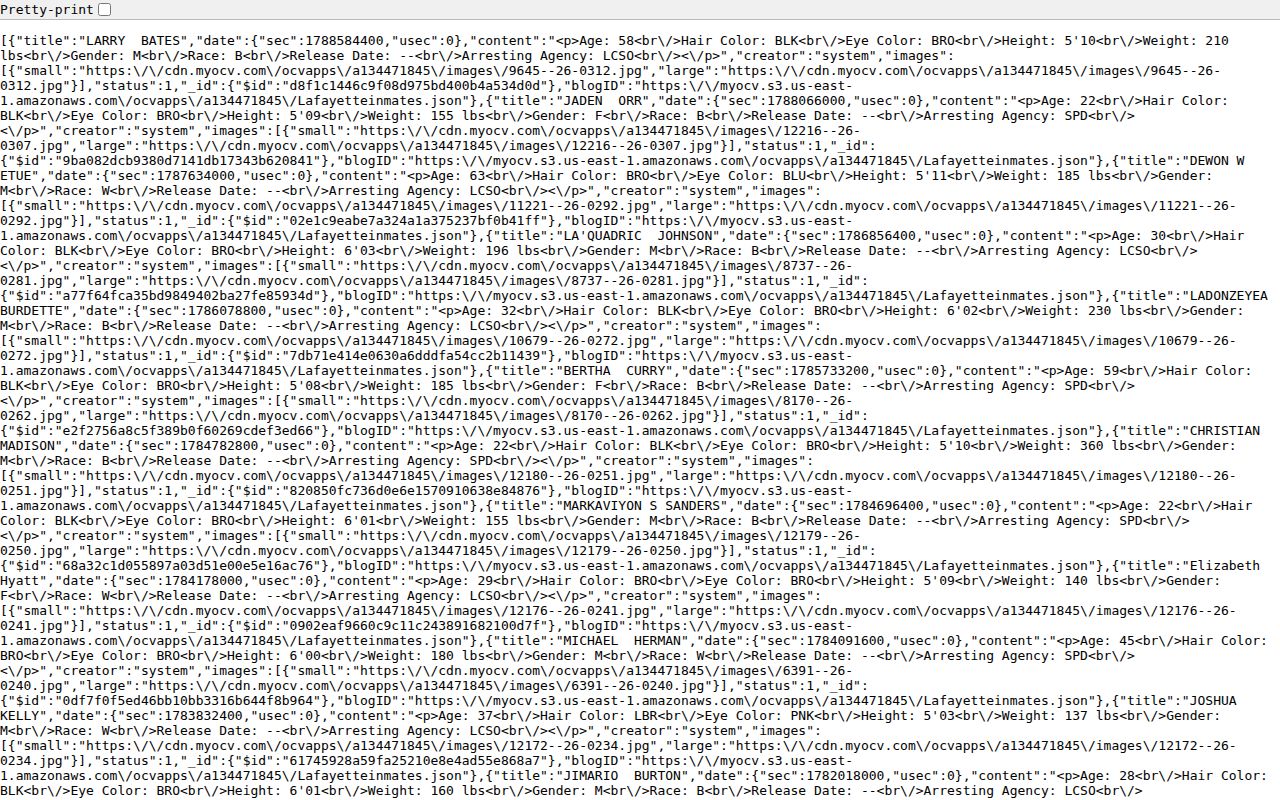
The capture documents an official records interface, not a gallery for republishing faces.
Lafayette Arrest-Log Entry Fields
Each public entry is an abbreviated roster card. It gives enough context to narrow a records request. Plenty of fields may exist in the internal detention log without ever showing here. Read only what the interface actually states.
| Displayed item | Record limit |
|---|---|
| Name, image, age | Identity clues, not proof of guilt or a safe name-only match |
| Physical descriptors | Hair, eyes, height, weight, gender, and race can separate similar names |
| Arresting agency | The listed agency, not the whole investigative history |
| Release date | May be blank, delayed, or later updated |
| Feed date | A sorting value, not a proven arrest or posting time |
The public card leaves a lot out. Booking number, charge text, bond, intake time, court date, warrant number, and disposition stay off the screen. Arkansas jail-log rules treat arrest, confinement, release, offense class, officer, and warrant data as facility records. A focused request can surface those nonexempt facts.
Weekend Lafayette Arrest Reports
No weekend or holiday upload schedule is published. A record dated on a Saturday can show up in the feed. One weekend entry proves nothing about staffing, Monday surges, or holiday delays. Intake and app publication are separate events. Widen your search span. Verify with the jail directly. A missing entry could mean release, a booking elsewhere, incomplete intake, a citation without jail admission, or simple delay. It never settles whether an arrest happened. For the newest bookings, the Arrests Last 24 Hours page is the tighter route.
Note: Lafayette County has documented no weekend batch process and no regular holiday backlog for its arrest records.
City Blotters Are Not Published
Stamps, Lewisville, and Bradley publish no daily arrest logs. Those city departments do make arrests. The public roster path runs through LCSO, which publishes county-jail bookings. So a city arrest still surfaces in the county feed once a jail booking is accepted. Regional news helps fill the gaps, but selectively. The KSLA regional report source shows Stamps coverage built on sheriff and Arkansas State Police sourcing across county lines. A TXKToday story on Lewisville traces one case from arrest into bail and court coverage, while Bradley's community crime archive stays historical. None of them is a complete arrest log.
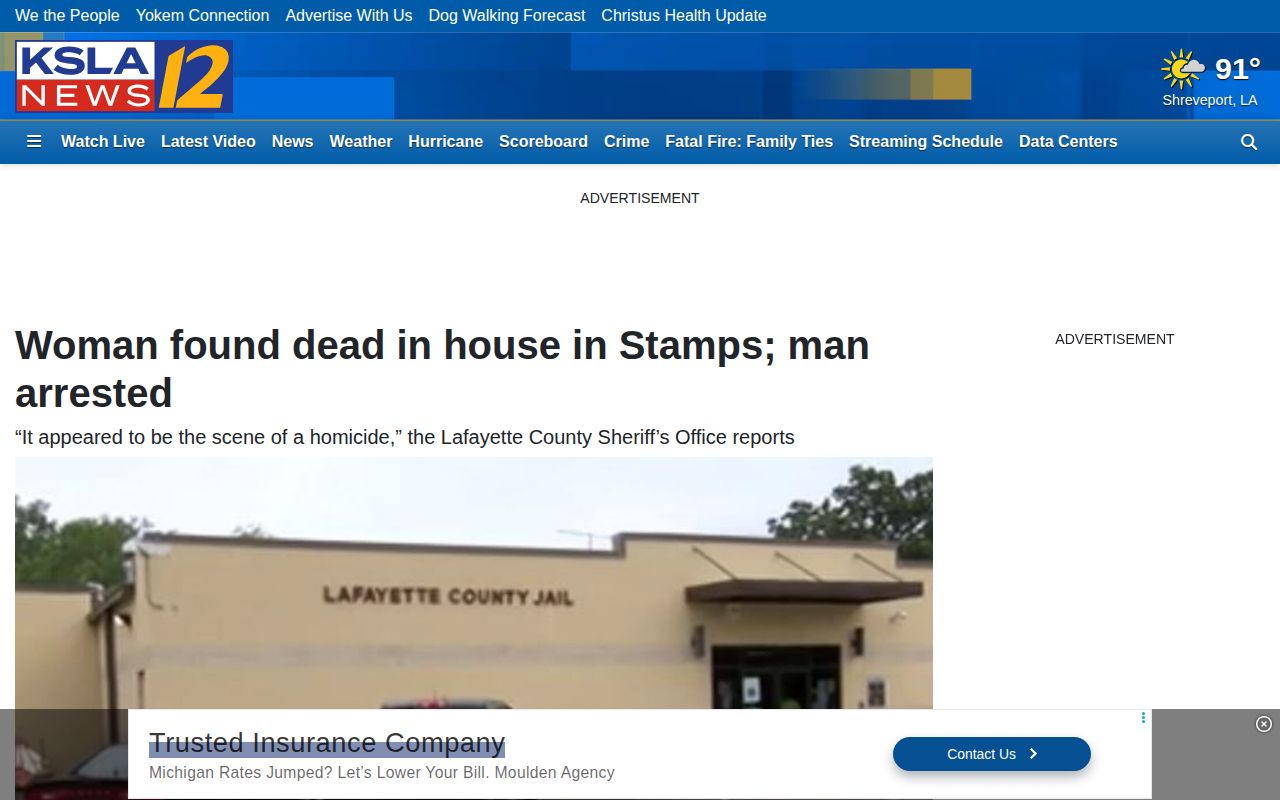
This dated report must not be mistaken for a recurring Lafayette County blotter.
Unofficial Lafayette Booking Mirrors
Official sources always come first. RecentlyBooked offers an unofficial Lafayette County mirror claiming to check public sources more than once daily. Its count still shifts over time. BustedNewspaper keeps a local recent-booking page, and Mugshots.com serves as a historical county index. Mirrors like these lag, omit entries, duplicate names, and keep stale booking photos up. The RecentlyBooked Lafayette page shows its claimed coverage.
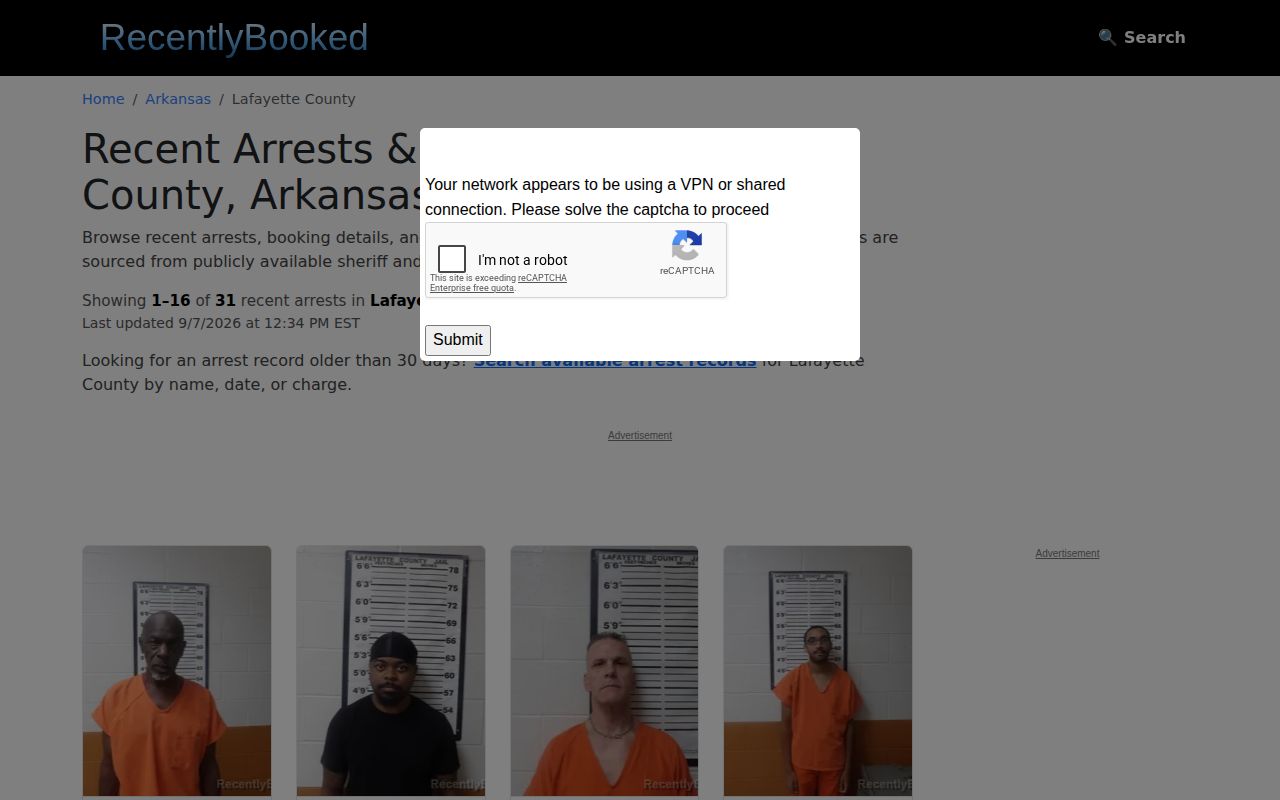
A shifting mirror count proves little. It cannot show present custody or completeness. Arrests.org lists no Lafayette County, Arkansas page. Its Louisiana result is the wrong county, Mugshots.zone leaves Lafayette off its Arkansas list, and CountyInmateSearch is unofficial as well. None of these stands in for LCSO, a FOIA response, or a court file.
Archive Lafayette County Arrest Records
Arkansas law treats jail booking records as a defined category. Arkansas Code § 13-4-404 puts fingerprint cards, booking photographs, and detention logs inside that category. The county must keep these arrest records for at least five years. After that, disposal can happen only on the county judge's order. The sheriff recommends it. That rule governs what the agency keeps. It does not govern how long a feed card or CDN image floats around online.
Older Lafayette County arrest records start with LCSO. The office sits at 5 Courthouse Square, Lewisville, AR 71845, phone 870-921-4252. Name the person, the date range, the agency, and the exact fields you want. Ask plainly whether the record is held, transferred, sealed, or destroyed under the schedule. For case events beyond the booking, Search ARCourts opens the public docket. A docket can show what happened later. Still, match the identity and the court before trusting the match.
Be precise about what you request. The public roster card is not the same thing as the underlying jail record. Ask for inspection or an electronic copy. Expect lawful redaction of protected material. When the booking date is fuzzy, give a narrow range plus any known arresting agency. Keep the agency's response. It may explain whether an arrest record was sealed or moved to storage. It may note disposal under the statute. The five-year floor never overrides exemptions for juveniles, victims, active investigations, or sealed matters.
Historical digging has another route. The Arkansas State Archives research service offers finding aids. It also covers county indexes, microfilm facts, and request handling. No dedicated digitized archive of current Lafayette County booking photos exists. The Arkansas Digital Archives holds selected government material. It is not a full jail collection. A newspaper archive can supply a dated lead. Even so, the originating jail or court record remains the source that settles the question.
- Roster
- A current or recent custody display.
- Detention log
- The jail’s operational intake, confinement, and release record.
- Disposition
- The court’s later action, which may differ from the booked charge.
Archived Lafayette County arrest records are not always fully open. A file can be sealed, redacted, or withheld under state exemptions. Sealing does not mean deletion either. The original jail file still sits in agency custody. Access depends on the statutory rules that apply.
Lafayette Feed Photos Are Not Archives
Lafayette County booking photos travel an unusual path. They surface through the OCV app feed and an official CDN image address. That is no conventional county archive page. This design explains why the human inmate-search route looks different from the direct data feed. It also means a copied image address is no permanent county record link. The app manifest shows images enabled. Neither the manifest nor LCSO promises a URL stays stable once an entry rolls off.
Want a past Lafayette County booking photo? Request the agency-held photograph instead of trusting an old browser bookmark. Identify the person, the booking date range, and your preferred electronic format. State retention rules count booking photographs as jail booking records. Yet lawful sealing can still block access. Redaction, disposal after the minimum period, or other restrictions can too. Absence online tells you nothing about which condition applies.
The same discipline protects the blotter's chronology. A third-party page may preserve a face long after LCSO updates its own record. A regional news story may cover only one stage of the case. Compare the booking date and the source's publication date. Add any release information and the later Search ARCourts disposition. Never blend those dates into a single event. When sources conflict, the jail owns the detention record and the court owns the case result.
Public Record Search
Sponsored Results